Quantity surveyor for urban renewal: the role at each stage and how the fee is set
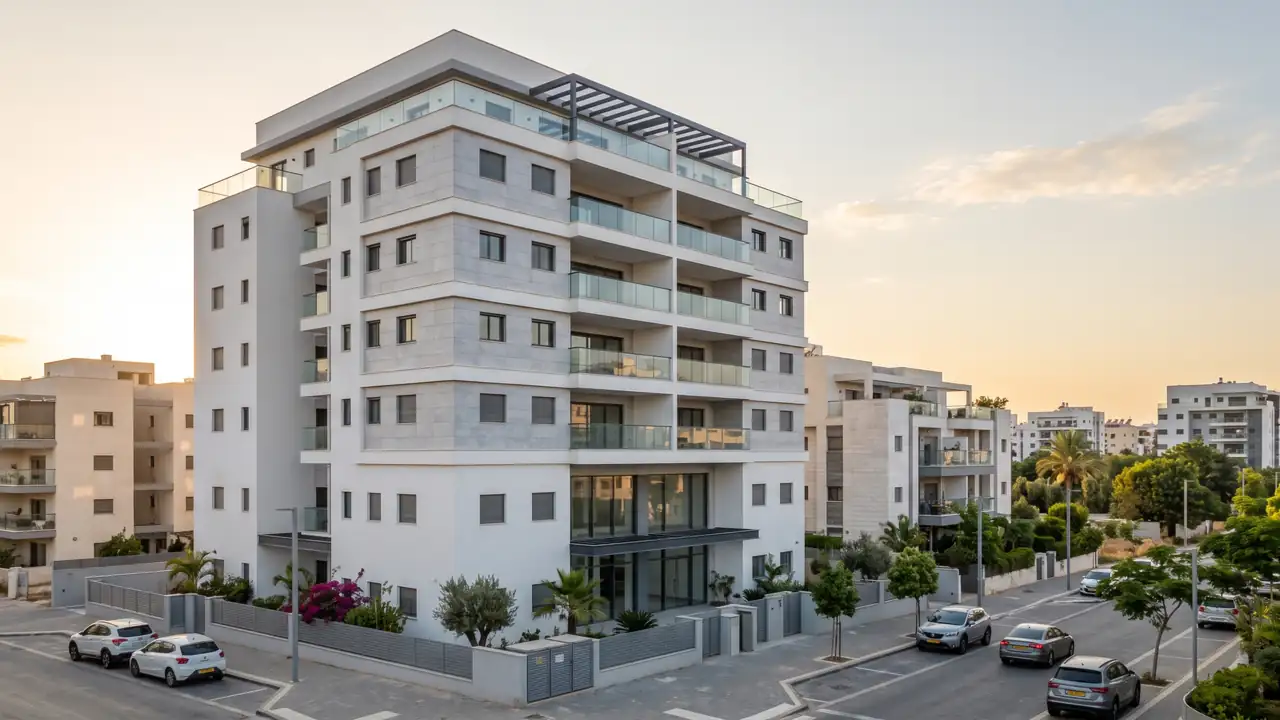
A quantity surveyor for urban renewal follows a Pinui-Binui project (demolish and rebuild, with new flats for the existing owners) from the feasibility check, through the tender bill of quantities, to the contractor's final account. What makes this work different is that one building carries two specification levels, one for the owners' replacement flats and one for the flats the developer sells, and that it starts with the demolition of an existing building. This page explains what is done at each stage, what to prepare and how the fee is set.
Before the owners' agreement: quantities for the feasibility check
In Israel the economic feasibility of a Pinui-Binui project is checked by an appraiser, usually under Standard 21 of the appraisal standards committee. Construction cost is one of the main components of that check, so it is better based on quantities measured from the design, even an early design, than only on a general price per m². The quantity surveyor does not prepare the feasibility check but gives it a base: areas by flat type, basements, external works and demolition, each with its source.
At this stage the technical appendix of the agreement with the owners is also settled, and it defines what a replacement flat receives. A quantity surveyor for urban renewal reads that appendix next to the sale specification of the new flats, and marks, already now, the items that will split later: flooring, wall tiling, sanitary ware, kitchen, doors and electrical points. Official information on urban renewal procedures in Israel is published by the Government Authority for Urban Renewal (in Hebrew).
Replacement flats and developer flats: one column decides the BOQ
The structure, the envelope, the main systems, the basements and the external works are shared by all the flats and are measured once. The difference is in the finishes items: a replacement flat is delivered under the agreement with the owners, and a developer flat under the sale specification. So every finishes item gets a specification-level column. Without that column you cannot price correctly, you cannot split the cost between the owners and the developer, and you cannot answer an appraiser's question about the difference between the two levels.
In a tall building another layer is added, the floor types: typical floors, special floors and a penthouse, each with different finishes. How to split the BOQ by floor type and by base prices is explained on the page on luxury urban renewal BOQs. The protected room (mamad) areas in the replacement flats are checked against the permit's area table, not only against the model.
The quantity of a finishes item is measured once and is split between the replacement flats and the developer flats as a visible allocation. That way no square metre is counted twice, and no square metre disappears between the two specifications.
Demolition, basements and work next to neighbours
A Pinui-Binui project opens with demolition. The demolition and dismantling chapter relies on the existing-condition drawings or on a survey, and on a hazardous materials survey. Without such a survey the asbestos item stays open and is not entered as zero. What goes into the demolition chapter is set out on the page on the demolition BOQ.
After the demolition come the excavation, the shoring and the basements, where a large part of the cost hides. Ground anchors and internal struts are alternatives, not additions to each other. When the new building is next to existing buildings, the BOQ also needs movement monitoring, solid hoarding, temporary passages and limits on noise and dust. Phased work is not priced in a linear way: an extra phase means more hoarding, more traffic arrangements and more management time, not "a little more" of the same work.
The tender BOQ, interim accounts and variations
The tender bill of quantities follows the familiar stages, structure, shell and finishes, with the demolition and basement chapters at its head. What is different in a BOQ for TAMA 38 and urban renewal compared with a new building is explained on the page on the BOQ for TAMA 38 and urban renewal. Items measured per flat, such as handover, defects inspection and coordination of owners' changes, also get a line of their own.
During construction the BOQ becomes the basis for the accounts. In an interim account the cumulative quantities are measured against the same items, and any work that was not in the BOQ goes through as a variation with records. In Pinui-Binui many variations come from owners' changes and from surprises in the demolition, so it is worth separating them already in the BOQ. More on this on the page on the partial payment certificate.
The fee of a quantity surveyor for urban renewal, and what to prepare
- An area table by flat type, marking the replacement flats and the developer flats.
- The technical appendix of the agreement with the owners, and the sale specification.
- A finishes table with base prices, if there is one.
- Architectural and structural drawings, the soil report and the shoring design.
- Existing-condition drawings or a survey, and a hazardous materials survey.
The fee is set as in any project, by the built area and by the number of building types. A residential building of about 4,000 m² including parking, for example, falls in the bracket of up to 5,000 m²: ₪25,000 excluding VAT. In a complex with several identical buildings the price is set by the number of building types, not by the total area. Two specification levels and special floors add work of separation and counting. The figures are for orientation only, all the brackets are on the page on what a quantity surveyor costs, and the price for each project is set in a written quote.
A quantity surveyor measures the works the way a contractor who has to build them would. A quantity surveyor may be an engineer or a registered building technician, like Yaakov Avital. Pricing and estimates are an extra service: verbal feedback on prices together with you, with no commitment. Real prices come from the contractors' bids for the project.
Frequently asked questions
What is the difference between a quantity surveyor and an appraiser in Pinui-Binui?
An appraiser assesses value and economic feasibility. A quantity surveyor measures the works and arranges them in a bill of quantities that can be sent to contractors. In Pinui-Binui the two meet: the quantity surveyor's quantities give the appraiser a checked base for the construction cost.
When should a quantity surveyor join an urban renewal project?
Before you ask contractors for bids, once there are architectural and structural drawings. It can also be earlier, for first quantities for a budget, and during construction, to check accounts and variations.
Who orders the bill of quantities?
Usually the developer, to get bids on a common basis and to build a budget, or a contractor who is bidding and wants to check the quantities before pricing and procurement. Whoever orders it receives the BOQ and the calculation file behind it.
Can I also get an estimate?
Yes, as an extra service. An estimate is an assessment of cost based on the documents and the assumptions written in it, and it is not a commitment to the bids that will arrive.
Have a project? Tell me briefly what the project is and what already exists. When the project is a good fit, I usually reply with focused questions and a written quote.
Contact me for a quote* Created with AI for marketing, for illustration only. Not reviewed by Yaakov Avital and not professional advice. Every project must be checked on its own by a professional quantity surveyor and an engineer.