BOQ for roads and external works: from the subgrade to the road markings
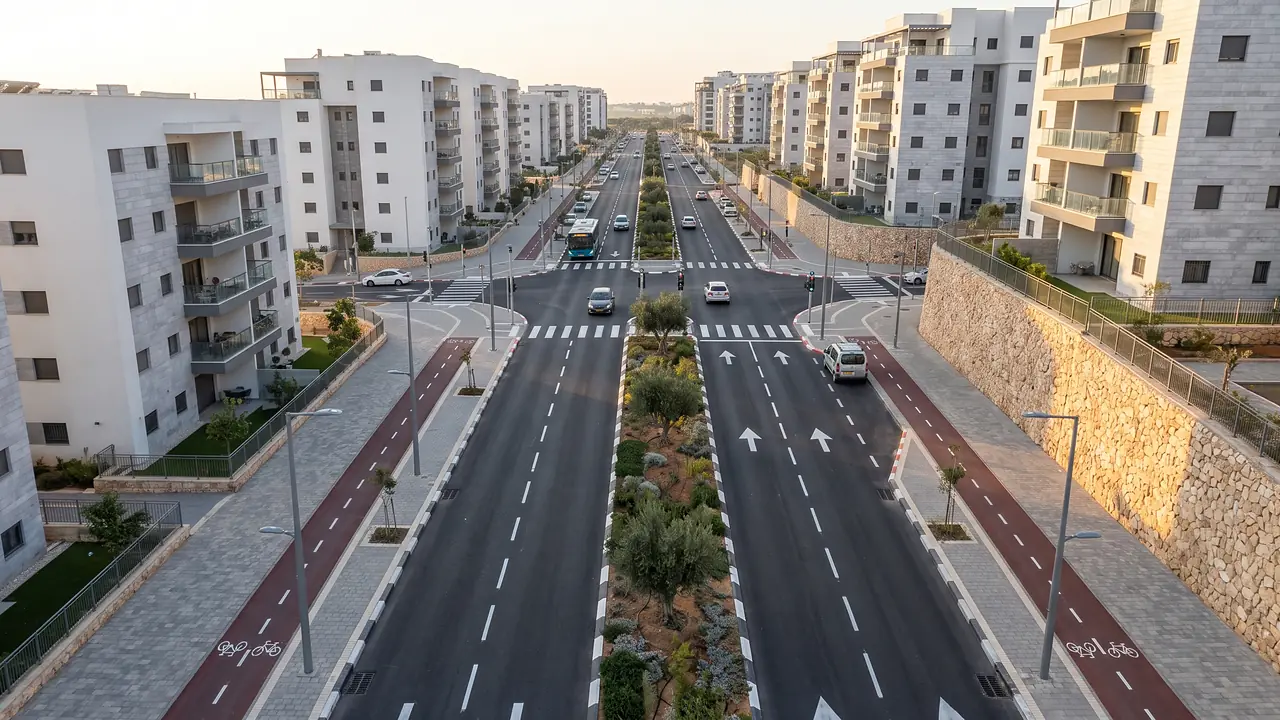
A BOQ for roads is built in layers: the same area is measured again and again, once as subgrade, once as sub-base, once as a spray coat and once as asphalt, and next to it kerbs, road markings, channels and lighting are measured in metres. I have experience in quantity takeoff for the contractor's accounts on urban paving and external works: sub-base, asphalt, kerbs, road markings, road signs and temporary traffic arrangements, and in splitting a neighbourhood's external works bill of quantities (BOQ) into packages for supplier quotes. This page explains how these quantities are built and how to check them.
The layers of a BOQ for roads
Paving and external works items sit mostly in chapter 51 of the General Specification for building works, Israel's inter-ministerial specification: preparation and demolition, earthworks, sub-base, asphalt, paving and kerbs. Alongside it are chapter 52 for road markings and signs, chapter 40 for external works, chapter 41 for landscaping and irrigation, chapter 08 for lighting and utility ducts, and chapter 57 for drainage. The point is that several items sit on the same area, and that lets you check the bill from the inside.
| Item | Unit | Calculation | Quantity |
|---|---|---|---|
| Road formation and subgrade compaction | m² | Area of the junction | 413 |
| Type A sub-base, 25 cm thick | m³ | 413 times 0.25 | 103.25 |
| Prime coat | m² | Area of the asphalt | same as the layer area |
| Kerb | m | Measured along the junction | 134.5 |
When the layers are measured from the same area, you can cross-check them. In the asphalt bill for one neighbourhood, the tack coat area was exactly the same as the area of the dense asphalt concrete layer above it, 57,925 m². If the areas do not match, one of the items is missing or inflated.
Measurement rules you write in the notes
Many arguments over road accounts start with a measurement rule that nobody wrote down. In one account it was defined that the sub-base under the pavement continues 0.5 metre behind the kerb and 0.3 metre behind the edging stone, 25 cm thick. The asphalt area of the road was calculated from five strips of length times width, and every item in the account had a numbered sketch attached. That way the site supervisor can check every figure without guessing. Payment accounts have their own page: interim payment applications in construction.
What else goes into a road contract
An urban road is not only asphalt. On the upgrade of a street and a junction that I measured for the accounts, the cumulative quantities included about 2,745 m³ of sub-base, about 7,591 m² of subgrade, about 949 metres of kerbs, 288 m² of paving, 321 m² of cycle path, 1,267 metres of kerb painting and 28 road signs. The same contract also had 19 lighting columns with 34 luminaires, about 1,980 metres of lighting ducts, 10 drainage chambers, about 1,530 metres of irrigation lines and 82 trees and palms.
- Temporary traffic arrangements are measured in units per day and in metres per day, and sometimes there is a traffic consultant for each stage.
- Landfill fees are measured in m³ or in tonnes, and they are an item like any other.
- The source of the item: in the account of a framework contract, every line is classified as a tender item, a designer's item or a price-list item.
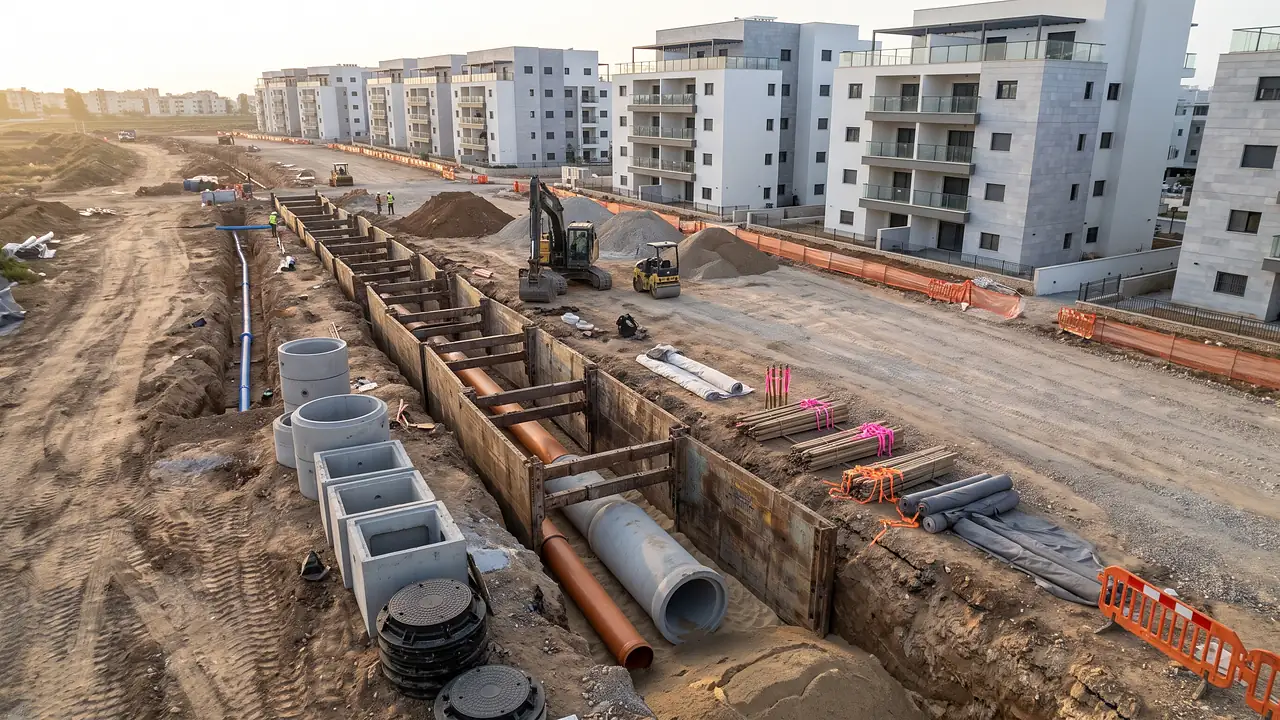
For the works under the road, pipes and manholes, there is a companion page: BOQ for infrastructure.
Splitting the bill into supplier packages
At tender stage, whoever prices a BOQ for roads needs prices from suppliers. So every line is tagged by trade or supplier: asphalt, kerbs and paving, drainage, lighting and landscaping. In the external works of one neighbourhood the asphalt package had three layers: 17,500 m² at 7 cm thick, 57,925 m² at 5 cm and 38,393 m² at 4 cm. The precast products package included interlocking block paving of several types, 215 gully inlets and about 1,270 tree grates. When each package is closed, comparing three suppliers is simple.
Before a road bill goes out for pricing, check that the subgrade, the sub-base, the spray coats and the asphalt agree with each other, and that every item measured in metres is tied to a drawing. A check like this catches a missing item before it turns into an extra.
A quantity surveyor is an engineer or a registered building technician, like Yaakov Avital, who knows both the bill and the account. On roads, a quantity takeoff that holds up through the project is one you can come back to in every account and find the source.
Frequently asked questions
How is the area set for a quote on a BOQ for roads?
By the subgrade area, that is, the area of road formation and compaction: carriageways, pavements and paths. This is the area all the layers sit on, and the scale is on my quantity surveyor fees page. The price for each project is set in a written quote.
What is the difference between asphalt measured in m² and asphalt measured by weight?
A layer of fixed thickness is measured in m² at the thickness stated in the item. A layer of varying thickness, such as a levelling course, is measured by weight, in tonnes, so the delivery notes need checking.
Are lighting and drainage included in the road bill?
Usually yes, as separate chapters in the same contract. Check that there is no duplication between the road's drainage chapter and the infrastructure bill of the same project.
Have a project? Tell me briefly what the project is and what already exists. When the project is a good fit, I usually reply with focused questions and a written quote.
Contact me for a quote* Created with AI for marketing, for illustration only. Not reviewed by Yaakov Avital and not professional advice. Every project must be checked on its own by a professional quantity surveyor and an engineer.