BOQ for infrastructure (sewer, drainage and water): what to measure and how to check
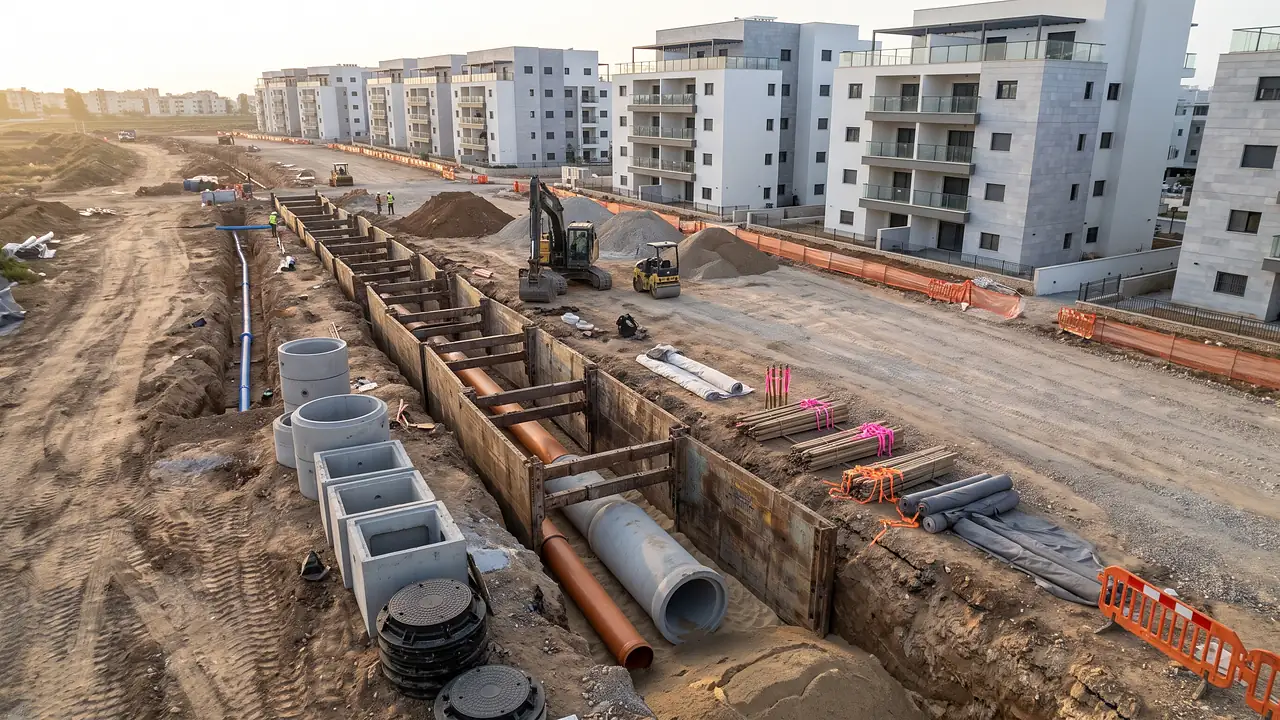
A BOQ for infrastructure such as sewer, drainage and water lines is not measured in m² but in metres, by diameter, by depth and by number. I have experience in measuring and checking quantities for urban sewer lines, from pipes 160 mm in diameter to polyethylene pipes 710 mm in diameter, manholes up to about 6 metres deep, pipe jacking and pipe insertion, and the reinstatement of the road and the pavement after the work. The work was done on the contractor's side: checking bills of quantities (BOQs) against the drawings before a tender, measuring from CAD drawings, and quantity calculations for the contractor's accounts.
How a BOQ for infrastructure is built
The sewer, water and drainage items sit mostly in chapter 57 of the General Specification for building works, Israel's inter-ministerial specification: pipes by type and diameter, precast inspection manholes, connections to existing manholes, insertion and jacking, and CCTV inspection of the lines. Reinstating the carriageway and the pavement after the excavation is measured in chapter 51: breaking out, earthworks, sub-base and asphalt. Next to them come concrete items, daywork, equipment, shoring, and open items for a police escort and for locating existing utilities.
| Component | Unit | What defines the item |
|---|---|---|
| Sewer or drainage pipe | m | Type, diameter, class, and a half-metre depth band |
| Inspection manhole | each | Diameter, depth, cover, drop and connectors |
| Connection to an existing manhole, or a manhole on an existing line | each | Diameter of the line and work under flow |
| Pipe jacking or insertion | m, and shafts each | Diameter, pipe material and shaft depth |
| Road and pavement reinstatement | m² | Theoretical trench width times length |
Pipes by diameter and depth band
A pipe is measured by length, but its price depends on depth. So the bill splits each diameter into half-metre depth bands, for example 2.75 to 3.25 metres or 4.25 to 4.75 metres. The band is set by the average depth of the two manholes at the ends of the section. One bill for replacing sewers in city streets had 4,345 metres of pipe in diameters from 160 to 630 mm, in depth bands down to 4.25 metres, along with 238 manholes.
The fill volume and the area of road broken out are derived from the theoretical trench width stated in the notes to the bill, not from the width actually dug. A worked example: in a section 3 metres deep, with a pipe 0.5 metre in diameter and a theoretical trench width of 1.2 metres, the fill height above the pipe is 3 minus 0.5 minus 0.3 of bedding, that is 2.2 metres, and the fill volume per metre of length is about 2.6 m³. With that figure you can check an item that looks too high or too low.
Manholes, connections and work on a live line
A manhole is one unit, but around it come many add-ons: a heavy-duty cover for the road, an external drop, manhole connectors, a channel at the base and a landing inside a deep manhole. The same street bill had 243 add-ons for heavy-duty covers, 75 connections to existing manholes, 60 manholes on live lines and 122 external drops. Work on a live line needs bypass pumping and a connection under flow, and that is a separate item. Crossing a road or a water main by pipe jacking needs shafts, and sometimes grouting and soil stabilisation.
Beyond the excavation itself there is scope that does not show on the drawing: traffic management, a police escort, weekend work, excavation permits from the utility owners and an as-built survey. Earthworks themselves have their own page: earthworks quantities.
Checking an infrastructure bill against the drawings
In an infrastructure bill it is easy to miss things, because lengths and depths change from drawing to drawing. On one gravity sewer line I measured 884 metres of pipe from the drawings, while the bill showed 995 metres. On the same line the drawings had 7 manholes one metre in diameter, and the bill had 5. In another check I found a typing error in a manhole diameter, and items that are on the drawing but not in the bill. A gap does not necessarily mean that someone made a mistake: sometimes the drawing was updated after the bill. But you need to know about it before you price. How to cross-check quantities is explained on the quantity cross-check page.
An item that is on the drawing and not in the bill does not disappear from the site. Mark it as missing, state the quantity from the drawing and ask the designer, instead of quietly leaving it out.
A sewage line at a treatment plant site
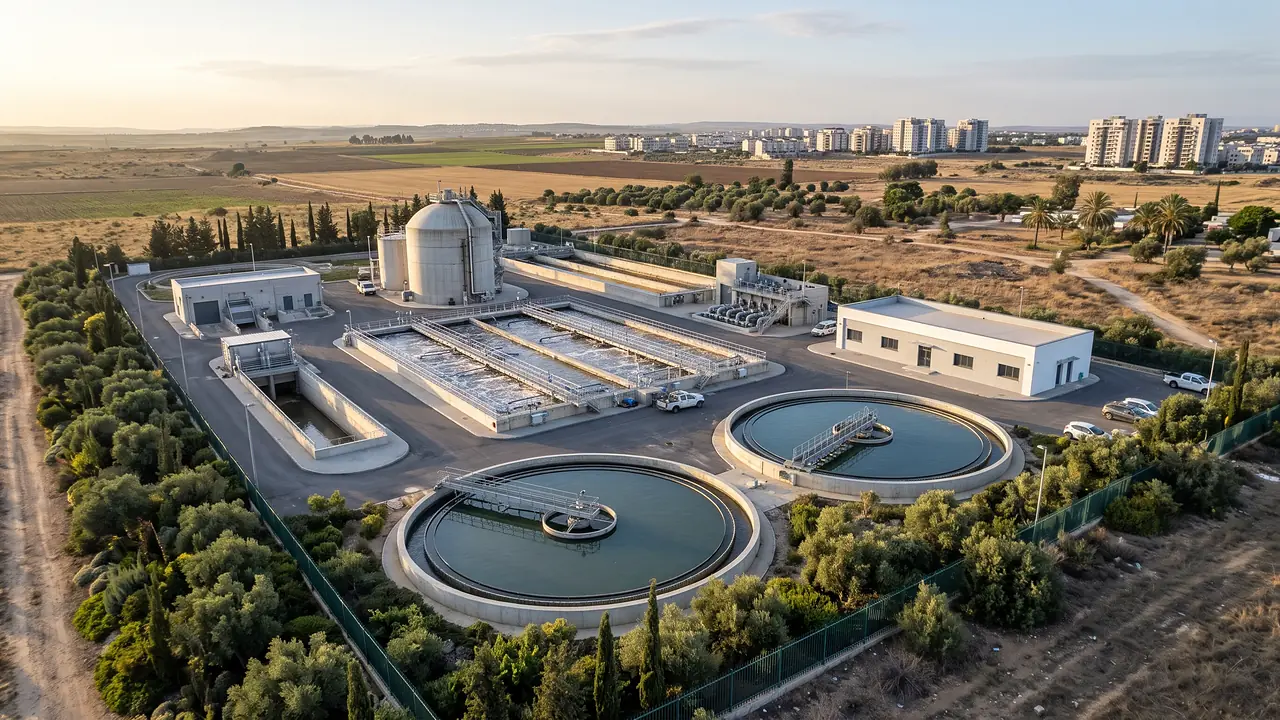
I also checked quantities for diverting a sewage line in fibreglass pipes 1.2 metres in diameter at a wastewater treatment plant site. The principles are similar, at a different scale: a large-diameter pipe is measured in depth bands, the stiffness class of the pipe is a separate add-on, and manholes about 6 metres deep get landings and stainless-steel railings. Equipment such as a sluice gate, a pump and a jib crane needs its own price analysis. Checking against the drawings, I measured 88.07 metres instead of 90.75 metres in one section, and a bedding volume of about 130 m³ against 300 m³ in the bill.
A quantity surveyor is an engineer or a registered building technician, like Yaakov Avital, who knows the method of measurement for each chapter. In infrastructure, a good quantity takeoff starts with a table of every section: the depth of the manholes, the diameter, the depth band and the length.
Frequently asked questions
How is the area set for a quote on a BOQ for infrastructure?
When one figure in m² is needed, I use the reinstatement area: the length of the lines times the theoretical trench width defined in the bill. That way the same scale from my quantity surveyor fees page applies, and the final price is set in a written quote.
Why does the depth band matter so much?
Because the depth of the excavation changes the shoring, the fill and the pace of work. The same pipe at 2 metres deep and at 4.5 metres deep is two items with different prices.
Can a BOQ for infrastructure be prepared from PDF drawings?
Yes, but it is better to get DWG files as well, with the cover and invert levels of the manholes. From them you can extract the depths and build a precise table of sections.
Have a project? Tell me briefly what the project is and what already exists. When the project is a good fit, I usually reply with focused questions and a written quote.
Contact me for a quote* Created with AI for marketing, for illustration only. Not reviewed by Yaakov Avital and not professional advice. Every project must be checked on its own by a professional quantity surveyor and an engineer.