Hebrew construction terms: a spelling glossary for the building site, from bniya to tiach and klonas
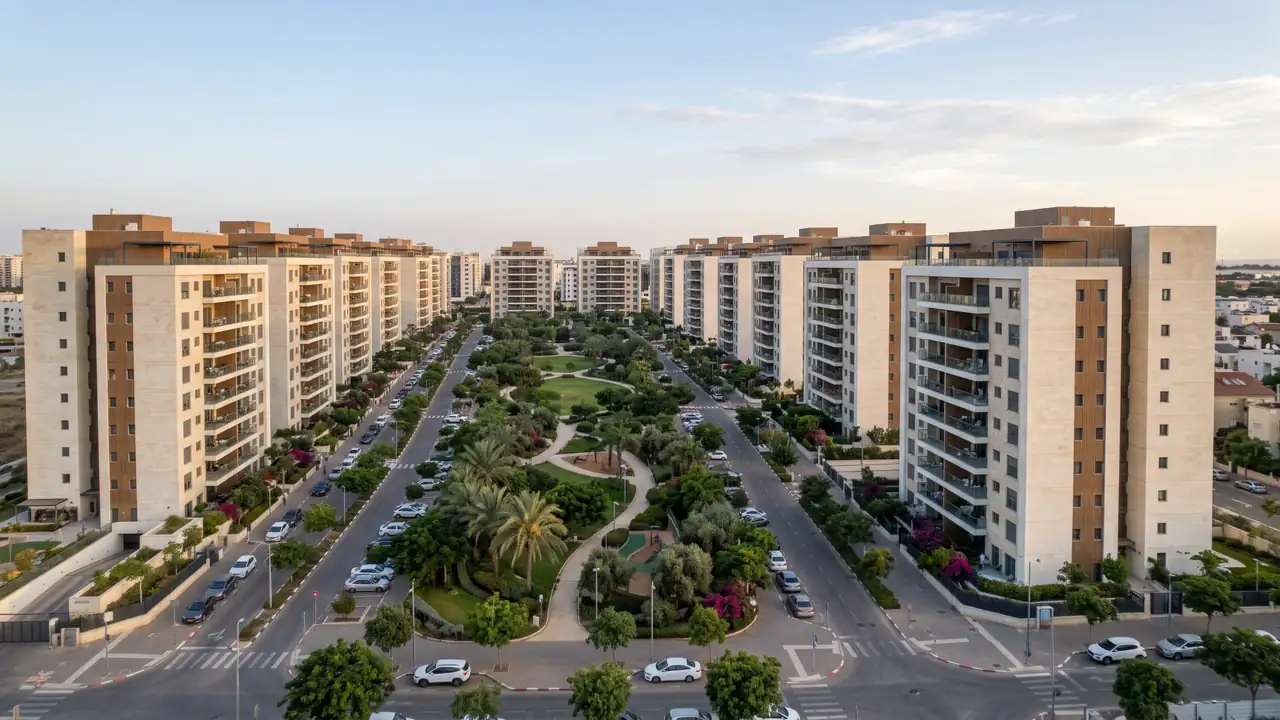
Hebrew construction terms are often written in more than one way, starting with the word for construction itself: בנייה or בניה. Both forms are common, and the standard full spelling is בנייה (bniya), with two yods, as in the name of the law, חוק התכנון והבנייה, the Planning and Building Law. This guide is for professionals from abroad who work with Israeli drawings, specifications and bills of quantities. I have experience in quantity takeoff for residential, public and commercial buildings, and from bills of quantities, specifications and real searches I have gathered here the terms that are most often misspelled, with what each of them means in the bill of quantities.
Construction, בנייה or בניה: what the spelling rules say
Under the full-spelling rules of the Academy of the Hebrew Language, the rules for writing Hebrew without vowel signs, a consonantal yod in the middle of a word is doubled when there is no vowel letter next to it, as in בניין (binyan, building) and עניין (inyan, matter). In בנייה the yod is a consonant in the middle of the word, so it is written twice. At the end of a word it is not doubled: חשמלאי (electrician), ודאי (certainly), אולי (perhaps). Even so, many documents and searches use בניה, and both forms are understood. Titles of official documents, such as the name of the law, use the full spelling. Whoever searches for בנייה or בניה ends up at the same answer.
Hebrew construction terms for earthworks and the structural frame
| Correct form | How it sometimes appears | What it is in the bill of quantities |
|---|---|---|
| גרמושקה gramushka | גרמושקע, גרמושקא, גרמשקה | The permit drawing set: the drawings submitted for the building permit, a source for the area schedule |
| תב״ע taba | תבע | The zoning plan that applies to the plot: building rights, building lines and uses |
| חפירה chafira | חפירא | Excavation: earthworks, measured in m³ by volume before excavation |
| מקדם התפחה mekadem hitpacha | מקדם התפכה | Bulking factor: the number that turns a volume in the ground into a volume for haulage |
| מילוי חוזר miluy chozer | מלוי חוזר | Backfill: returning soil around foundations and walls, with compaction |
| כלונס, כלונסאות klonas, klonsaot | קלונס, קלונסאות, כלונסאוט | Pile, piles: a deep foundation, measured in linear metres by diameter |
| קידוח kiduach | קדוח | Drilling: part of the piling work |
| רפסודה rafsoda | רפסודא | Raft foundation: a flat, continuous foundation under the building |
| טפסנות tafsanut | תפסנות, טפסנוט | Formwork: preparing the moulds for casting, measured in m² |
| ברזלנות barzelanut | ברזלנוט | Rebar work: preparing the reinforcement, measured by weight |
| יציקה yetzika | יצקה, יצקא | Casting: the concrete itself, measured in m³ |
| אשפרה ashpara | אישפרה, אשפרא | Curing: keeping the concrete moist in the first days after casting |
| טרומי tromi | תרומי, טרומיי | Precast: an element made in a factory and assembled on site |
| קיר תמך kir tomech | קיר תמח | Retaining wall: a wall that holds back a difference in ground level |
| ממ״ד mamad | ממאד | Protected room: the reinforced safe room in every Israeli flat (residential protected space), with its own items |
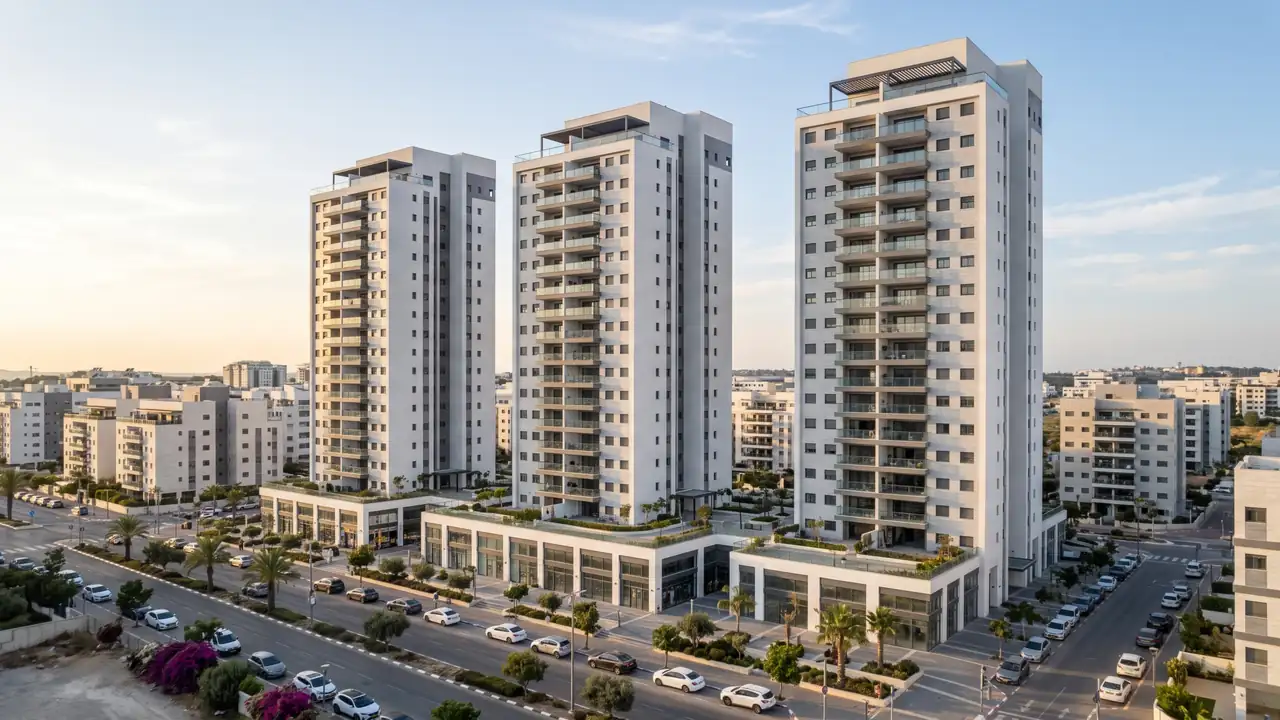
Hebrew construction terms for masonry and finishes
| Correct form | How it sometimes appears | What it is in the bill of quantities |
|---|---|---|
| בלוקים blokim | בלוקיים | Blockwork: masonry walls, measured in m² by thickness |
| שטראבה, שטרבה shtraba | שטרבע, שטרבא, שתראבה | The connection of a block wall to a column with a concrete strip and starter bars |
| קוצים kotzim | קוצין | Starter bars: short rebar bars that connect elements |
| חגורה chagora | חגורא | Bond beam: a horizontal concrete beam inside a block wall |
| טיח tiach | טיאח | Plaster: the coating layer on the wall, measured in m² |
| שפכטל shpachtel | שפכתל, שפחטל | Skim coat: a thin smoothing layer before paint |
| פנלים panelim | פנאלים | Skirting: strips at the bottom of the wall, measured in linear metres |
| איטום itum | אטום | Waterproofing: the work itself; אטום is an adjective |
| פיגומים pigumim | פגומים | Scaffolding: a temporary structure for work at height; פגומים (pgumim, defective) is something else entirely |
Two of the Hebrew construction terms in the table are not errors but different words. טייח (tayach), with two yods, is the tradesman, the plasterer, and the item in the bill is always טיח, plaster. And אטום is an adjective, as in קיר אטום, a blank wall, while the item is איטום, waterproofing. The same goes for פיגומים and פגומים: one missing letter, and a completely different meaning. In a bill that passes between several bidders, every description needs to be readable in one way only.
Abbreviations and units of measurement
- תב״ע (taba): town building plan, the zoning plan that applies to the plot.
- תמ״א (tama): national outline plan; TAMA 38 is the plan for strengthening existing buildings.
- ממ״ד and ממ״ק (mamad and mamak): residential protected space, the protected room in each flat, and floor protected space.
- מ״ר, מ״ק, מ״א: square metre, cubic metre and linear metre (m², m³ and m), the three most common units of measurement in the bill.
The unit is part of the term. Skirting is measured in linear metres: in a room of 4 by 3 metres the perimeter is 14 metres, and after a door 0.9 metres wide, 13.1 metres of skirting remain. Plaster is measured in m²: a wall 4 metres long and 2.6 metres high is 10.4 m² before openings are deducted. Whoever writes the right term with the wrong unit gets a price that does not fit the work.
Project and contract terms
- תמ״א 38, not תמה 38: TAMA 38, strengthening an existing building and adding construction to it.
- פינוי בינוי, not פנוי בנוי: Pinui-Binui urban renewal, demolishing a compound and rebuilding it.
- פאושלי (paushali), not פושלי: lump-sum, a contract at a fixed price, as opposed to a contract by measurement. On the difference, see the page variations in construction.
- עיכבון (ikavon), not עיקבון: retention, the amount held back from every payment application until the end. The full explanation is on the page interim payment application.
- תקורות אתר (tkurot atar): site overheads (preliminaries), the site costs that have no item of their own, such as a works manager, security and a crane. See site overheads.
- הצמדה למדד (hatzmada lamadad), not הצמדא למדד: index linkage, updating the amount by the construction inputs index. See index linkage and VAT.
- לוח זמנים (luach zmanim), not לוח זמניים: the construction programme (schedule), the activities, their durations and the links between them. See construction programme.
The rule: a spelling mistake in an item does not change the price, but a similar word with a different meaning can confuse a bidder. When in doubt, write the full description and not only the term.
Frequently asked questions
So which is it, בנייה or בניה?
In full spelling, בנייה. The form בניה is common in fast typing and in the shorter spelling used with vowel signs, and both are understood.
How is shtraba spelled?
שטראבה or שטרבה. What it is and how it is measured is on the page shtraba.
Where does the name gramushka come from?
From the Russian word for a small accordion, because of the way the sheets are folded. What it contains is on the page gramushka.
Who can go through my bill of quantities?
A quantity surveyor for construction projects. On the Hebrew terms of quantity surveying itself, see the Hebrew term for quantity surveyor, and on earthworks and piles, earthworks quantities.
Have a project? Tell me briefly what the project is and what already exists. When the project is a good fit, I usually reply with focused questions and a written quote.
Contact me for a quote* Created with AI for marketing, for illustration only. Not reviewed by Yaakov Avital and not professional advice. Every project must be checked on its own by a professional quantity surveyor and an engineer.